Dead Sea Ingredient Sourcing Guide for Skincare Buyers
A jar labeled “Dead Sea” can represent anything from a carefully characterized mineral-rich raw material to a formula whose connection to the region is difficult to understand. That distinction is why a Dead Sea ingredient sourcing guide matters. For skincare buyers, authenticity is not simply a matter of geography. It is a question of provenance, processing, formulation expertise, and whether the finished product respects both the nature of the ingredient and the needs of skin.
The Dead Sea has an exceptionally high salt concentration and a mineral profile unlike that of conventional seawater. Its waters and deposits contain salts of magnesium, calcium, potassium, sodium, bromide, and other naturally occurring constituents. Yet no two Dead Sea ingredients are identical after collection and processing. Understanding what a brand sources, how it is prepared, and why it appears in a formula offers a more intelligent way to choose Dead Sea skincare.
What “Dead Sea” Should Mean in a Skincare Formula
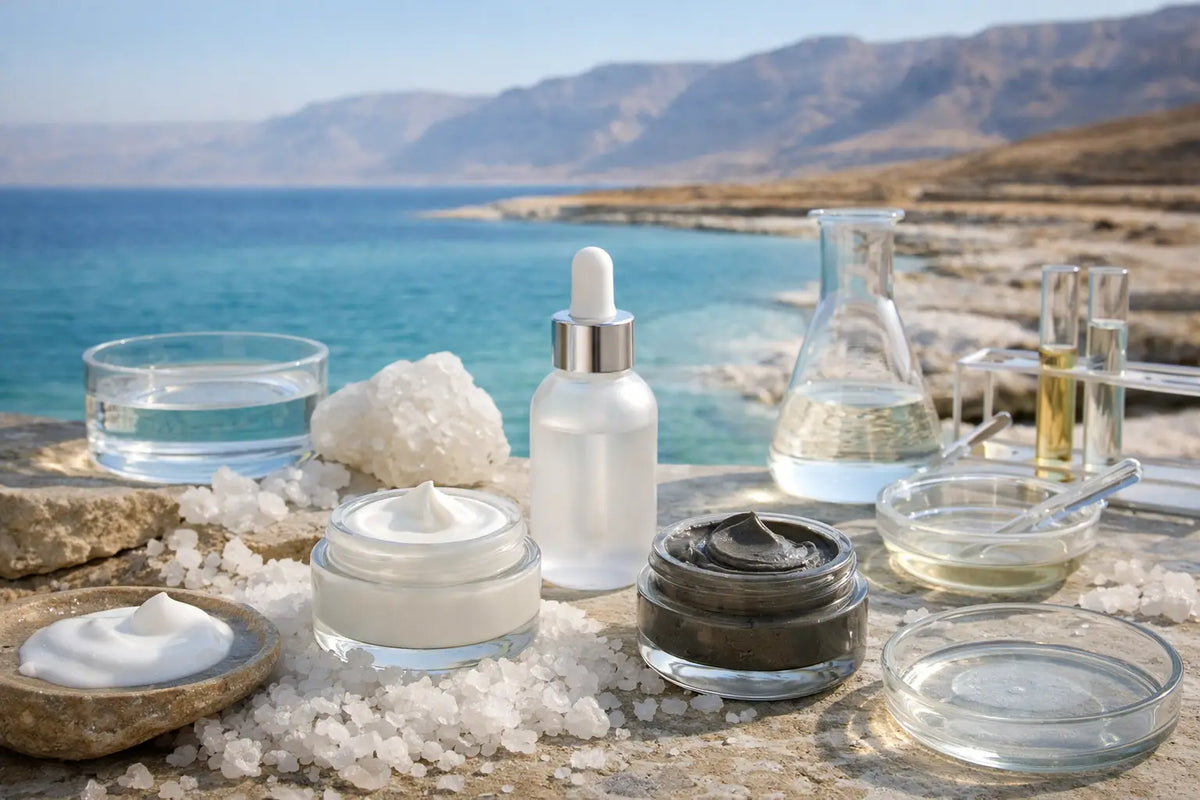
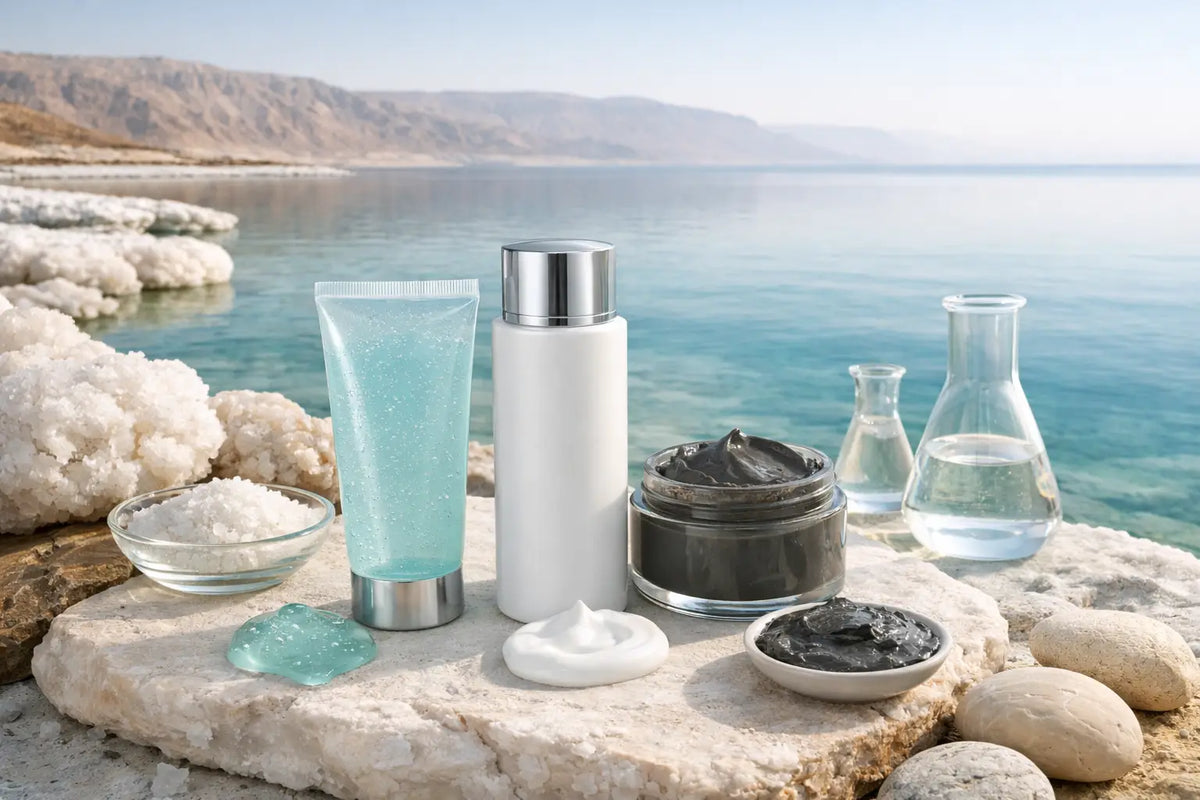
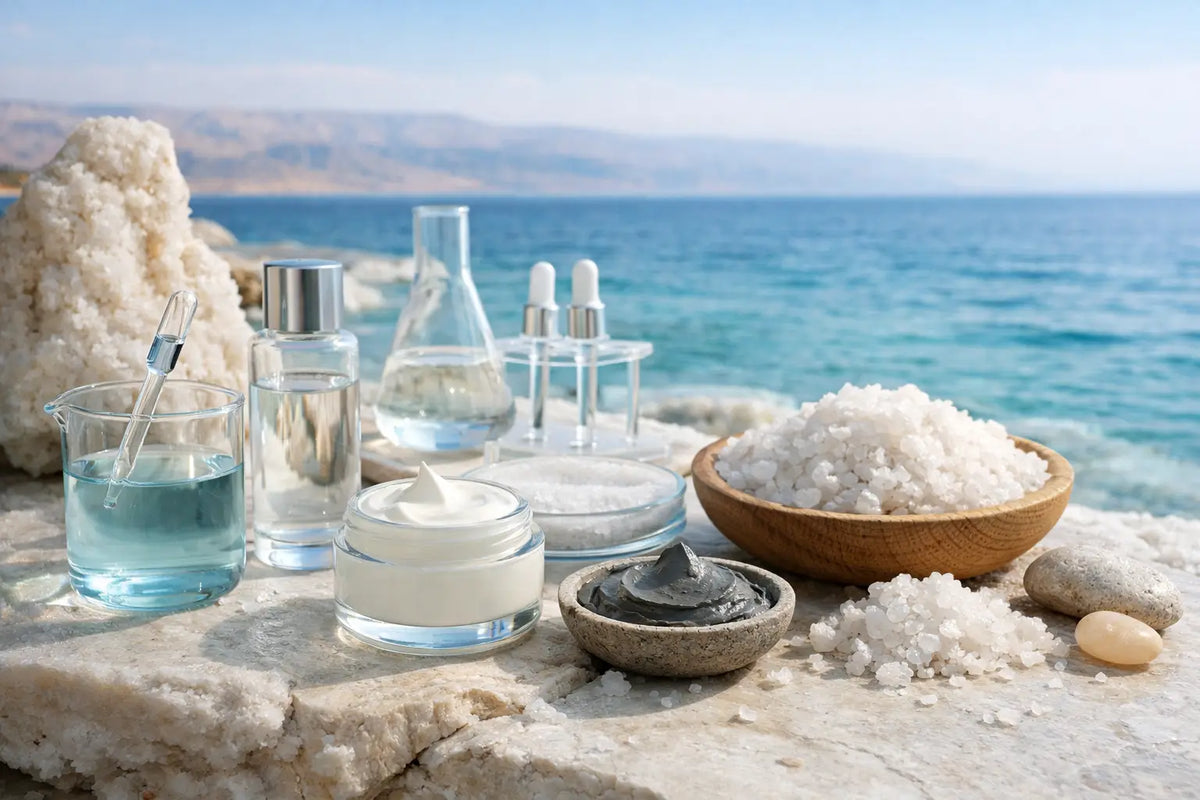
The most recognizable Dead Sea ingredients are mineral salt, mineral-rich water, and mud. Each has a different physical character and a different role in cosmetic formulation. Salt may be used in bath and body treatments, exfoliating products, or mineral-focused formulas. Mud is valued for its dense, sensorial texture and its content of fine mineral matter. Mineral-rich water may be incorporated into rinsed or leave-on products as part of a broader aqueous phase.
A credible product should make clear what it is presenting. “Dead Sea minerals” is a broad description, not a single standardized ingredient. On an ingredient list, consumers may see names such as Maris Sal, commonly used for sea salt, or Dead Sea Mud. The terminology can vary with the raw material, supplier documentation, and applicable ingredient naming conventions.
The presence of a Dead Sea-derived ingredient does not determine product quality on its own. Concentration, particle size, salt purity, the overall formula, packaging, preservation, and intended use all shape the experience. A mineral bath salt and a refined facial serum should not be judged by the same criteria because they solve different cosmetic problems.
The Dead Sea Ingredient Sourcing Guide: Start With Provenance
Provenance is the first standard. A responsible supplier should be able to identify the source of its mineral salts, mud, or water and maintain documentation through the supply chain. For a consumer, that evidence may not appear as a technical dossier on a product page. It should, however, be reflected in a brand’s specificity, consistency, and ability to explain its ingredient choices without vague claims.
Geographic origin alone is only the beginning. Natural raw materials vary from one location to another and from one collection period to the next. Established sourcing therefore relies on characterization and quality control. This may include evaluating mineral composition, moisture, microbial quality where relevant, heavy metal screening, appearance, odor, and physical consistency. The objective is not to make a natural material unnaturally uniform. It is to ensure that it is suitable for repeatable cosmetic use.
For mud in particular, the collection and preparation process deserves attention. Raw mud may contain coarse particles or natural debris that are unsuitable for a refined cosmetic product. Screening, filtration, controlled particle sizing, and hygienic handling can help create a smoother, more elegant material for masks and body treatments. Processing should preserve the ingredient’s useful mineral identity while making the material appropriate for skin contact and stable in a finished formula.
Authentic origin is not the same as raw, untreated material
Some shoppers assume that less processing always signals greater authenticity. In skincare, this is too simple. An ingredient can be genuinely sourced from the Dead Sea and still require careful purification, testing, or standardization before it belongs in a premium formula. These steps support quality, safety, texture, and consistency.
The better question is whether processing is purposeful and transparent. A mud mask should feel refined rather than gritty unless physical exfoliation is its stated purpose. A mineral cream should be balanced for its intended skin feel, rather than relying on a high salt load that may be unsuitable for some users. Good formulation translates a distinctive natural resource into an effective, pleasurable cosmetic experience.
Learn to Read Ingredient Claims With Precision
Marketing language can make any natural ingredient sound more singular than it is. Look beyond front-label phrases and consider the product type, ingredient list, and the level of detail provided about the material. A formula centered on Dead Sea mud should reasonably feature mud as a meaningful component of its identity and texture. A cream, serum, or eye product may use mineral-rich components more selectively within a sophisticated blend of humectants, emollients, antioxidants, peptides, or other cosmetic ingredients.
This is not a reason to dismiss formulas with a lower concentration of mineral material. Leave-on products need to meet demands that bath salts and rinse-off masks do not: elegant spreadability, compatibility with other skincare, comfort over time, and reliable stability. The best concentration depends on the product’s purpose and the full formulation architecture.
Be cautious with claims that imply a cosmetic ingredient can diagnose, treat, or cure a skin condition. Dead Sea minerals, salt, and mud have a long history in personal care, but responsible skincare language should focus on cosmetic benefits such as cleansing, smoothing, softening, conditioning, improving the appearance of surface radiance, and supporting a comfortable-looking complexion. Individual skin response can vary, particularly with highly mineralized or fragranced products.
Why Formulation Matters as Much as the Source
Dead Sea ingredients are compelling because of their natural mineral character, but they do not work in isolation. A salt scrub, for example, must balance crystal size, oil phase, rinse-off behavior, fragrance, and preservation where water is present. A mud mask must maintain a desirable texture throughout its shelf life and rinse away comfortably. A facial moisturizer needs to pair mineral components with ingredients that support hydration and barrier-conscious comfort.
This is where cosmetic science gives natural heritage its modern relevance. Skilled formulators consider pH, viscosity, ingredient compatibility, sensorial qualities, and packaging. They also consider how a product fits into a skincare routine. A mineral-rich body treatment can be generously indulgent, while a facial formula may need a more calibrated approach for the delicate skin around the eyes or for users who already use exfoliating acids or retinoids.
For those with reactive or very dry-feeling skin, a patch test is a sensible first step, especially with salt scrubs, mud masks, or products containing fragrance. Avoid applying salt-based products to broken or freshly shaved skin, where they may feel uncomfortable. These practical details do not diminish the value of Dead Sea ingredients. They help ensure that the ritual is appropriate for the user and the formula.
Questions Worth Asking Before You Buy
A thoughtful buyer does not need laboratory training to assess sourcing quality. The most useful questions are practical: Does the brand identify the Dead Sea ingredient clearly? Does it explain the product’s intended use? Is the formula presented with a realistic understanding of mineral skincare rather than exaggerated promises? Does the brand demonstrate long-term knowledge of formulation, testing, and ingredient provenance?
Also consider whether the product matches your immediate skincare objective. Choose a mineral salt treatment when the ritual of a bath or body exfoliation is the priority. Choose a mud mask when you want a rinse-off treatment with a rich, purifying-feeling sensorial experience. Choose a mineral-infused cream or serum when you are seeking daily hydration, smoothness, and a more polished-looking complexion within a broader Skin Longevity routine.
Premier Dead Sea approaches this heritage through more than 35 years of Dead Sea expertise, pairing mineral, mud, and salt traditions with advanced formulation technology. That combination is central to premium sourcing: respect for the origin, paired with the scientific discipline required to make it relevant to modern skin.
The most worthwhile Dead Sea skincare does not ask you to choose between nature and rigor. It shows how careful sourcing, measured processing, and sophisticated formulation can give an ancient mineral landscape a precise place in a contemporary routine.