How to Layer Face Serums for Better Results
A thoughtful serum routine should feel precise, not crowded. Learning how to layer face serums is less about applying every promising formula in the cabinet and more about selecting compatible treatments that answer what skin needs now: hydration, visible radiance, a smoother-looking texture, or renewed comfort. The right sequence helps each formula sit well on the skin while making the ritual easier to maintain.
For skin concerned with visible signs of aging, dryness, and loss of vitality, restraint often produces a more refined result than excess. A well-composed routine may use one targeted serum in the morning and one or two complementary treatments at night, supported by a moisturizer and daily sunscreen.
How to layer face serums with intention
The most practical starting principle is to apply water-based, lightweight formulas before richer or more emollient formulas. This usually means beginning with a clear hydrating or antioxidant serum, then following with a slightly more substantial treatment. Moisturizer comes afterward to cushion the skin and help limit moisture loss from its surface.
Texture is useful guidance, but it is not the only consideration. Formulation matters more than a product's appearance. Some active ingredients are designed to perform at a particular pH, while others are suspended in an oil or cream base. Follow a product's instructions when they differ from the usual light-to-rich order, especially for highly targeted treatments.
Apply each serum to clean skin with gentle pressing motions rather than vigorous rubbing. A small amount is generally sufficient. Allow the layer to settle until it no longer feels wet or slippery, usually around 30 to 60 seconds, before applying the next product. There is no need to wait several minutes between every step unless a formula specifically directs it.
Start with skin priorities, not a long ingredient list
A serum earns its place when it has a clear role. Before combining formulas, identify the concern you want the routine to address. Dehydrated skin may benefit from a humectant-focused serum and a nourishing moisturizer. Dull-looking skin may call for an antioxidant formula in the morning. Skin with uneven texture may be better served by introducing a renewing treatment gradually at night rather than adding several strong actives at once.
The following pairings are often straightforward when skin tolerates them well:
- A hydrating serum followed by a peptide or barrier-supporting serum.
- An antioxidant serum in the morning followed by moisturizer and broad-spectrum sunscreen.
- A hydrating serum before a retinoid treatment at night, when product instructions allow.
- A mineral-rich, comfort-focused serum paired with a moisturizer suited to the skin's dryness level.
Hydrating serums usually come first
Serums built around humectant ingredients, including hyaluronic acid, glycerin, and certain forms of panthenol, are commonly applied early in the routine. They work especially well on skin that is slightly damp, not dripping wet. Follow them with a moisturizer to provide comfort and reduce the tight feeling that can occur when dry air draws water away from the skin's surface.
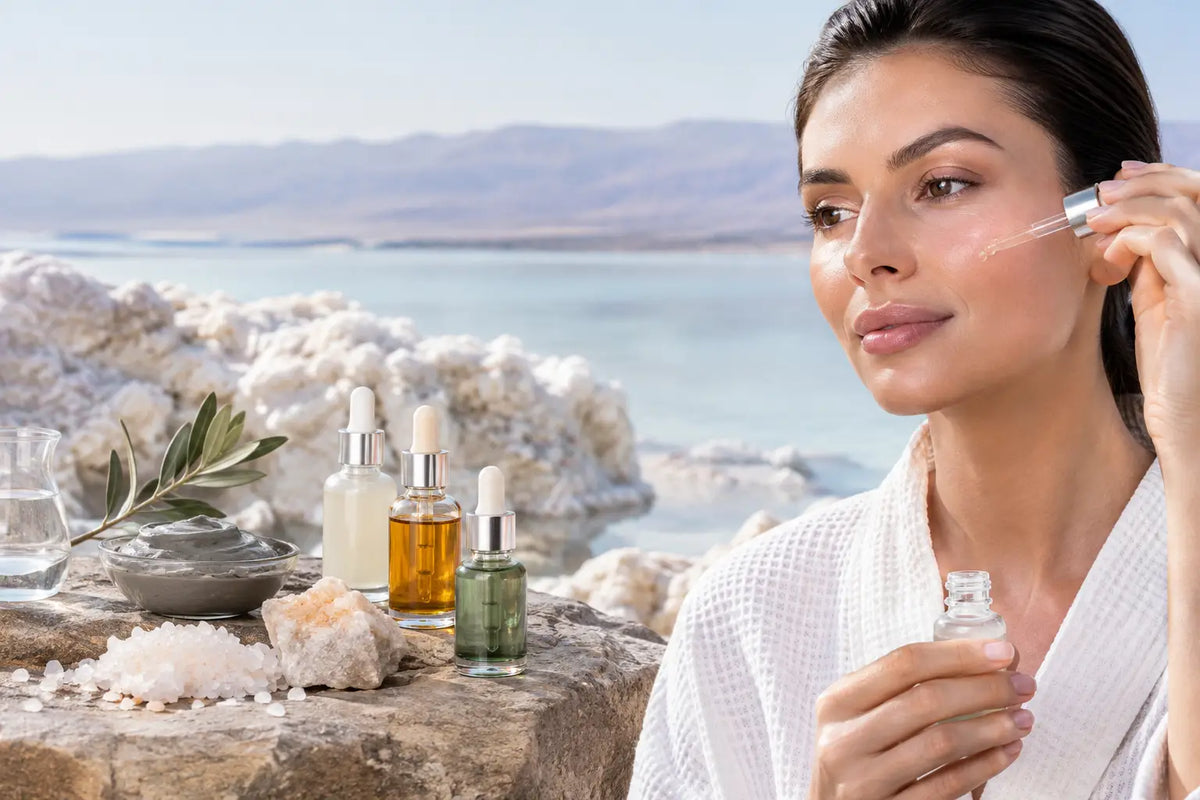
Dead Sea mineral skincare can be a sophisticated addition to this stage. Mineral-rich formulas are valued for their sensorial comfort and their ability to support a well-hydrated, supple-looking complexion within a balanced cosmetic formula. The quality of the complete formulation matters as much as the mineral story itself, particularly for skin that feels dry or sensitized.
Antioxidant treatments belong in the morning for many routines
A morning antioxidant serum can complement daily sun protection by supporting the skin's defenses against environmental exposure. Vitamin C derivatives are a familiar example, although their ideal format, concentration, and tolerability vary considerably from one formula to another.
After an antioxidant serum, apply moisturizer if needed, then finish with broad-spectrum sunscreen. Sunscreen remains the essential final step of a daytime skincare routine. Serums do not replace it, regardless of how advanced the formula may be.
Renewing treatments require a measured approach
Retinoids and exfoliating acids can be valuable cosmetic tools for improving the appearance of texture, clarity, and fine lines over time. They can also leave skin feeling dry, tight, or reactive when used too often or combined carelessly. Introduce one renewing treatment at a time, beginning with a modest frequency and observing how your skin responds.
If your routine includes a retinoid, many people prefer to use it at night after a hydrating serum, followed by moisturizer. Others find a simpler cleanse, treatment, moisturize routine more suitable. With exfoliating acids, it is often prudent to avoid using a retinoid in the same evening unless a dermatologist has advised otherwise. A calmer routine can be the more effective one over the long term.
A serum order for morning and evening
Morning skincare is usually about hydration, antioxidant support, and protection. After cleansing, apply your lightest hydrating or antioxidant serum. If you use a second lightweight serum, layer it next, then seal in comfort with moisturizer. Broad-spectrum sunscreen should always be the final step before makeup.
Evening offers more flexibility because sunscreen is no longer required. After cleansing, use a hydrating serum first if your skin benefits from it. Follow with a targeted treatment such as a peptide serum or a retinoid, depending on the evening and your skin's tolerance. Finish with a moisturizer that leaves the complexion feeling comfortable rather than coated.
Those with very dry skin may prefer a facial oil as the final step after moisturizer, not before water-based serums. Oil can provide a soft, protective finish, but it may interfere with the elegant layering of lighter products when applied too early. Skin that is prone to congestion may find that a well-formulated moisturizer provides enough richness without an additional oil.
What not to layer in the same routine
The question is not whether ingredients are universally compatible. It is whether your skin can comfortably tolerate the combination, frequency, and overall intensity. Layering multiple high-strength treatments can increase the likelihood of visible dryness, flaking, or discomfort without necessarily improving results.
Be particularly considered when combining retinoids, exfoliating acids, and strong antioxidant treatments. Some experienced users can incorporate these ingredients into a weekly routine, but they may alternate them rather than apply all of them in one session. If skin begins to sting, look persistently red, or feel unusually tight, simplify the routine. Gentle cleansing, hydration, moisturizer, and daily sunscreen provide a sound reset while you reassess.
Patch testing a new serum is also worthwhile, especially if your skin is reactive or you are introducing an active formula. Apply a small amount to a discreet area as directed by the product and observe for signs of irritation before using it across the face.
Make the routine sustainable
Consistency has more influence than complexity. A serum routine that takes two minutes and feels pleasurable is more likely to become a lasting part of daily care than an elaborate sequence of competing actives. This perspective aligns with Skin Longevity: caring for the visible quality, resilience, and comfort of the complexion through considered habits rather than quick, aggressive changes.
Adjust your layers with the season and with changes in how your skin feels. During colder or drier months, a hydrating serum and a more nourishing moisturizer may become central. In warm, humid weather, one lightweight serum may be all the skin wants beneath sunscreen. The best routine is responsive, not rigid.
A carefully layered serum ritual should leave skin feeling comfortable, balanced, and prepared for the day or night ahead. Choose each formula for a reason, introduce change gradually, and let your skin's response guide the next layer.